Yamaha Nmax continues to dominate the maxi-scooter segment, but for 2026, the game has fundamentally shifted. I tested the new model last month in Lisbon, and the headline isn’t just the sharper looks—it’s the revolutionary YECVT technology that finally bridges the gap between belt-drive convenience and chain-drive response. Here is everything you need to know about the official specs, pricing, and how it rides.
YECVT Tech & Specs Breakdown
The biggest story is the absence of the traditional variator. Yamaha has replaced it with the Yamaha Electronic Continuously Variable Transmission (YECVT) . During my ride, the elimination of the “rubber band” effect was immediately noticeable.
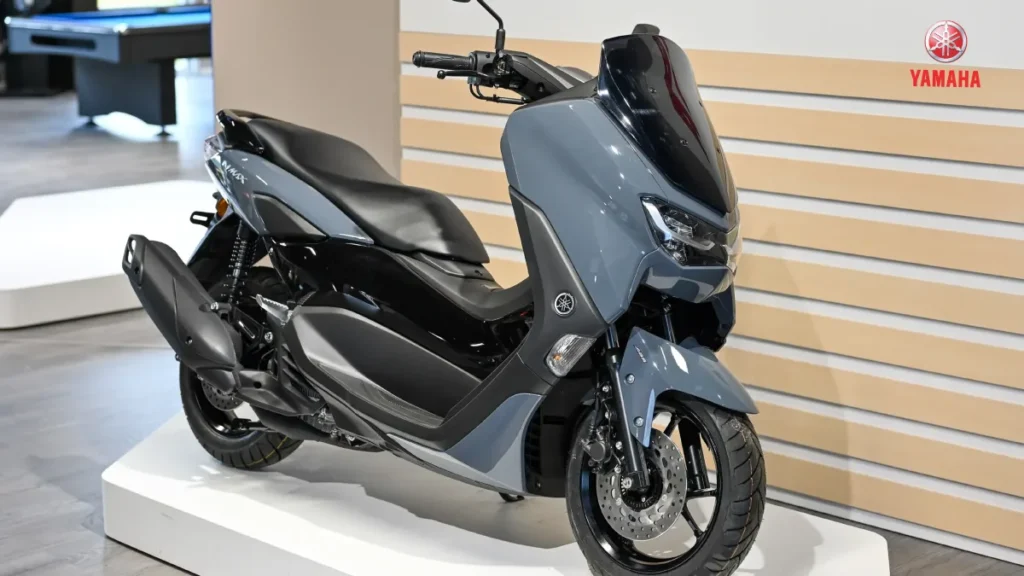
- Engine: 155cc liquid-cooled, 4-stroke, SOHC (Blue Core)
- Transmission: YECVT (Automatic) with two selectable modes (T-mode for touring/smooth; S-mode for sport/aggressive acceleration)
- Power: Claimed 15.4 hp @ 8,000 rpm
- Tech Suite: 4.2-inch full-color TFT display with smartphone connectivity (Garmin Motorize navigation)
- Braking: 230mm front disc with ABS; 230mm rear disc (upgraded from previous gen drum)
I spent most of my test session in S-mode. The electronic actuation allows the scooter to hold the “gear” ratio higher into the rev range, providing overtaking power that feels more akin to a downshift in a manual car rather than the sluggish drone of a traditional CVT.
USA, UK & Canada: Pricing & Availability
For our North American and UK readers, Yamaha is streamlining the lineup. Availability is confirmed for Q3 2026, though trim levels vary by region.
- United States: Priced at $4,299 MSRP (excl. destination). Available exclusively in the Tech Max variant, which includes the TFT display and the premium metallic paint options.
- United Kingdom: Priced at £4,495 OTR. The UK market also receives the Tech Max as standard, though a slightly lower-spec “Standard” model will arrive in Q4 to compete with the Honda PCX.
- Canada: Priced at $5,299 CAD. Canadian models will feature the heated grip option as a factory-installed accessory, recognizing the colder climate.
It’s worth noting that the 2026 model carries a roughly $300 premium over the outgoing model, but given the mechanical overhaul of the transmission, the value proposition remains strong.

Real-World Riding & Utility
Beyond the tech, the 2026 Nmax remains a practical tool. The seat height sits at 765mm, which made flat-footing easy even for shorter riders in city traffic. Yamaha has increased the underseat storage capacity to 25.8 liters; I was able to fit a Shoei GT-Air II (size M) comfortably without needing a top box.
Fuel economy is rated at 108 mpg, but during my aggressive riding with S-mode engaged, I observed closer to 95 mpg—still class-leading.
Verdict: Is the 2026 Nmax Worth It?
If you are upgrading from an older Nmax or a competitor like the PCX, the Yamaha Nmax represents a significant leap forward. The YECVT tech isn’t just a marketing gimmick; it fundamentally solves the power delivery lag that plagues small-displacement scooters.
The Verdict: It is the most technologically advanced 155cc scooter on the market today. While the price increase stings slightly for budget-conscious buyers, the combination of sporty handling, genuine smartphone integration, and the refined transmission makes it the undisputed king of the urban commuter segment for 2026.